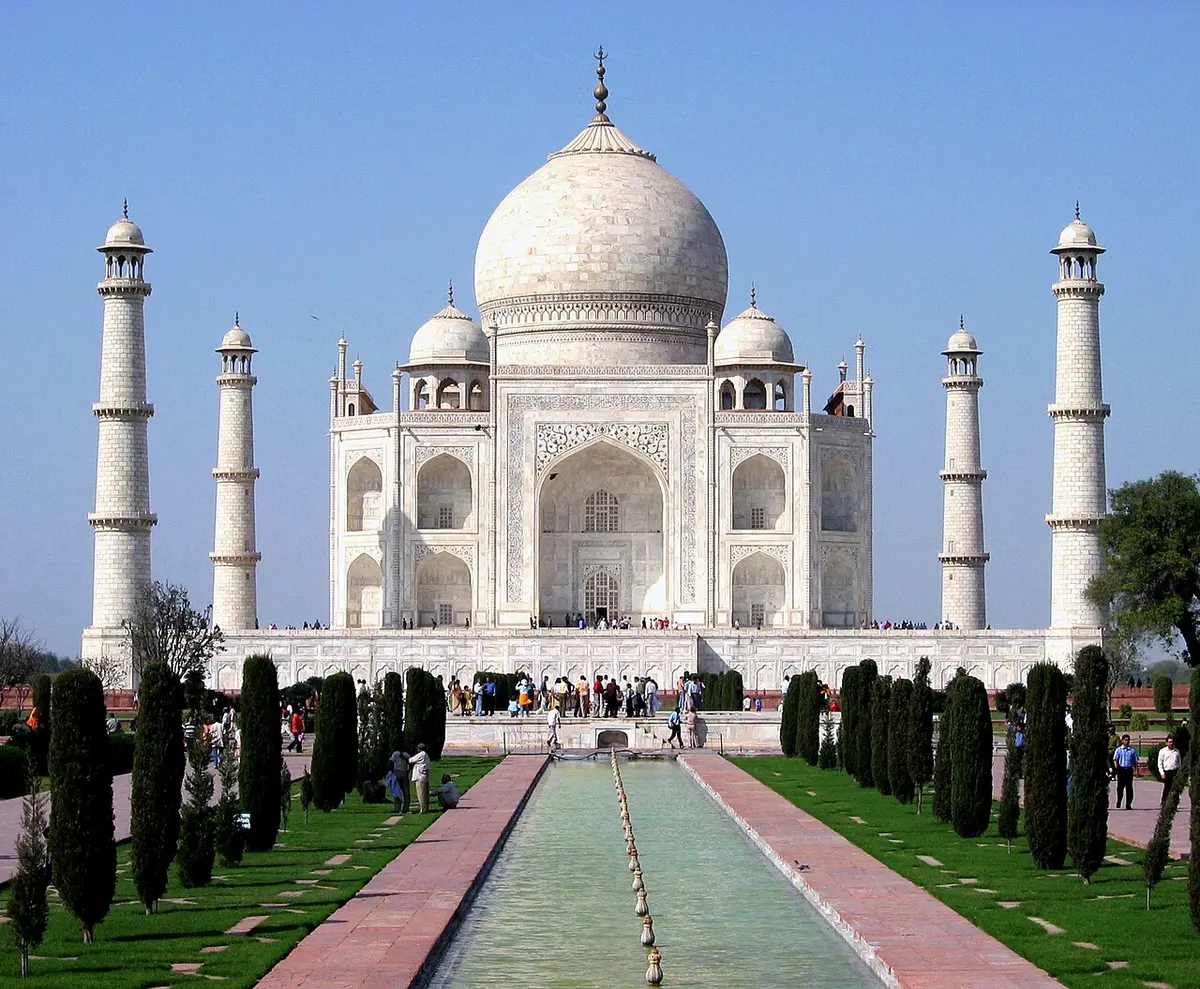
Due to the declining value of the United States dollar, tourism officials in India have decided to no longer accept the American currency at the site of the Taj Mahal and 120 other Indian historical sites.
The monument has refused to take dollars since November, as such, any American tourist wishing to visit the white domed marble mausoleum of Mughal emperor Shah Jahan for his wife Mumtaz Mahal will pay over 500 Indian rupees (US$ 12.80 at the current exchange rate) to be allowed in and additionally receive a free bottle of water.
The decision came as a result as part of the continuing decline of the American dollar, falling 11 percent in 2007 and now valued around 39 rupees.
Tourism Minister Ambika Soni told CNN-IBN that it seemed more practical and will save tourists money because "the dollar was weaker against the rupee," Soni added "Before the dollar lost its value, there was a demand to have (admission tickets) just in rupees."
Sources
- Larry McShane. U.S. dollar's no good at the Taj Mahal — New York Daily News, January 4, 2008
- Mike Carney. Greenbacks are no good at the Taj Mahal — USA Today, January 3, 2008
- Another blow for the greenback; your money no good at the Taj Mahal if it's from the US — Associated Press, January 3, 2008
Source & Attribution
Originally published by Wikinews on January 4, 2008. Original author: Wikinews.
CC BY 2.5. Photograph: The Taj Mahal has not accepted American dollars since November 2007.
Image: Dhirad. Photo: Dhirad, picture edited by J. A. Knudsen see permission Source file. CC BY-SA 3.0. CC BY-SA 3.0.
Disclaimer
This article retains its original publication date. Subsequent corrections and updates supplied by the source are retained when available. Thames Weekly is not affiliated with or endorsed by the original publisher unless expressly stated. Text and photographs remain credited to their respective creators.