On Tuesday the World Bank released the 2012 World Development Report on Gender Equality and Development. For Jamaica the report highlights a number of negative gender issues for the nation's men.
The report claims that getting an education in Jamaica is viewed as primarily a female activity. This cultural attitude encourages males to leave school early. In 2008, girls outnumbered boys in secondary school by a ratio of 1.04:1. At the same time, boys were more likely to have to repeat a year of school. Only 16% of boys passed five or more Caribbean Secondary Education Certificate exams compared to 30% of girls. Boys outperformed girls only in vocational subjects and physics. The report cites four key challenges in boys' development identified by a national programme. They are low self-esteem, limited future employment opportunities, lack of discipline, and masculine identities that eschew education.
A program in Jamaica uses cash incentives to encourage at-risk boys to stay in school; other countries like Pakistan use cash incentives to encourage girls to stay in school. Jamaica's program has resulted an average increase in boys attending school by 0.5 days a month. At the same time, fathers are urged to become more involved with their childrens' schooling and changes are being made to the curriculum to make it "more boy-friendly".
Definitions of masculinity result in less employment opportunities and smaller earnings potential. The report claims Jamaican definitions of masculinity also encourage more risky behavior, and sexual behaviors valuing achievement and competence above intimacy. The report says these factors increase physical and sexual violence towards women.
Male mortality is increasing in Jamaica. The report cites crime and violence as causes.
Sources
- Press release. Many Societies Gradually Moving to Dismantle Gender Discrimination, Yet More Can Be Done, Says World Bank Group President Jim Yong Kim — World Bank, September 24, 2013
- 2012 World Development Report on Gender Equality and Development — World Bank, September 24, 2013
Source & Attribution
Originally published by Wikinews on September 26, 2013. Original author: Wikinews.
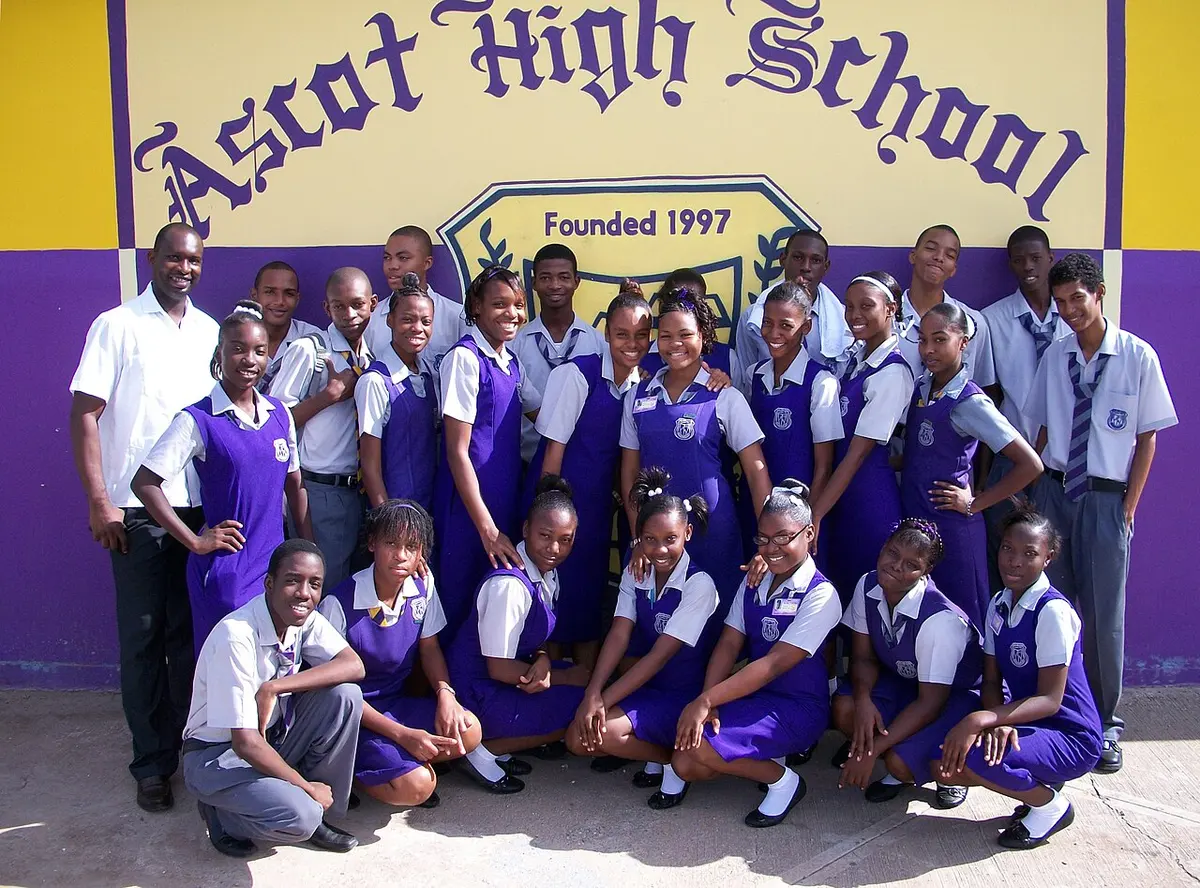
CC BY 2.5. Photograph: A group of students and their teacher at Ascot High School in Jamaica
Image: Raw9345. Photo: Raw9345 (talk) Own work (Original text: I (Raw9345 (talk)) created this work entirely by myself.) Source file. Public domain. Public domain.
Disclaimer
This article retains its original publication date. Subsequent corrections and updates supplied by the source are retained when available. Thames Weekly is not affiliated with or endorsed by the original publisher unless expressly stated. Text and photographs remain credited to their respective creators.