Data from recent detailed analyses of samples collected on NASA Apollo moon missions, released Sunday, show that Lunar water may originate from comets that collided with the moon early in its geologic history.
A team of astrophysicists led by James Greenwood of Wesleyan University in Connecticut analyzed samples collected on the Apollo 11, 12, 14, and 17 missions and found that the chemical properties of traces of lunar water in these samples differ from water typical of Earth.
"The values of deuterium/hydrogen (D/H) that we measure in apatite in the Apollo rock samples", Greenwood told Space.com, "is clearly distinguishable from water from the Earth, mitigating against this being some sort of contamination on Earth." Greenwood and his team of researchers studied in particular the variations of hydrogen in the mineral apatite.
The newfound data show that the chemical properties of water in the apatite samples resemble data from the comets Hale-Bopp, Halley, and Hyakutake, suggesting that the water present on the moon could have originated from these comets or others.
According to Greenwood, the results of this study could also provide evidence as to the origin of water on Earth.
Sources
- Denise Chow. Moon Water Most Likely Originated From Comets — Space.com, January 10, 2011
- Lunar water may have come from comets — Ninemsn, January 9, 2011
Source & Attribution
Originally published by Wikinews on January 11, 2011. Original author: Wikinews.
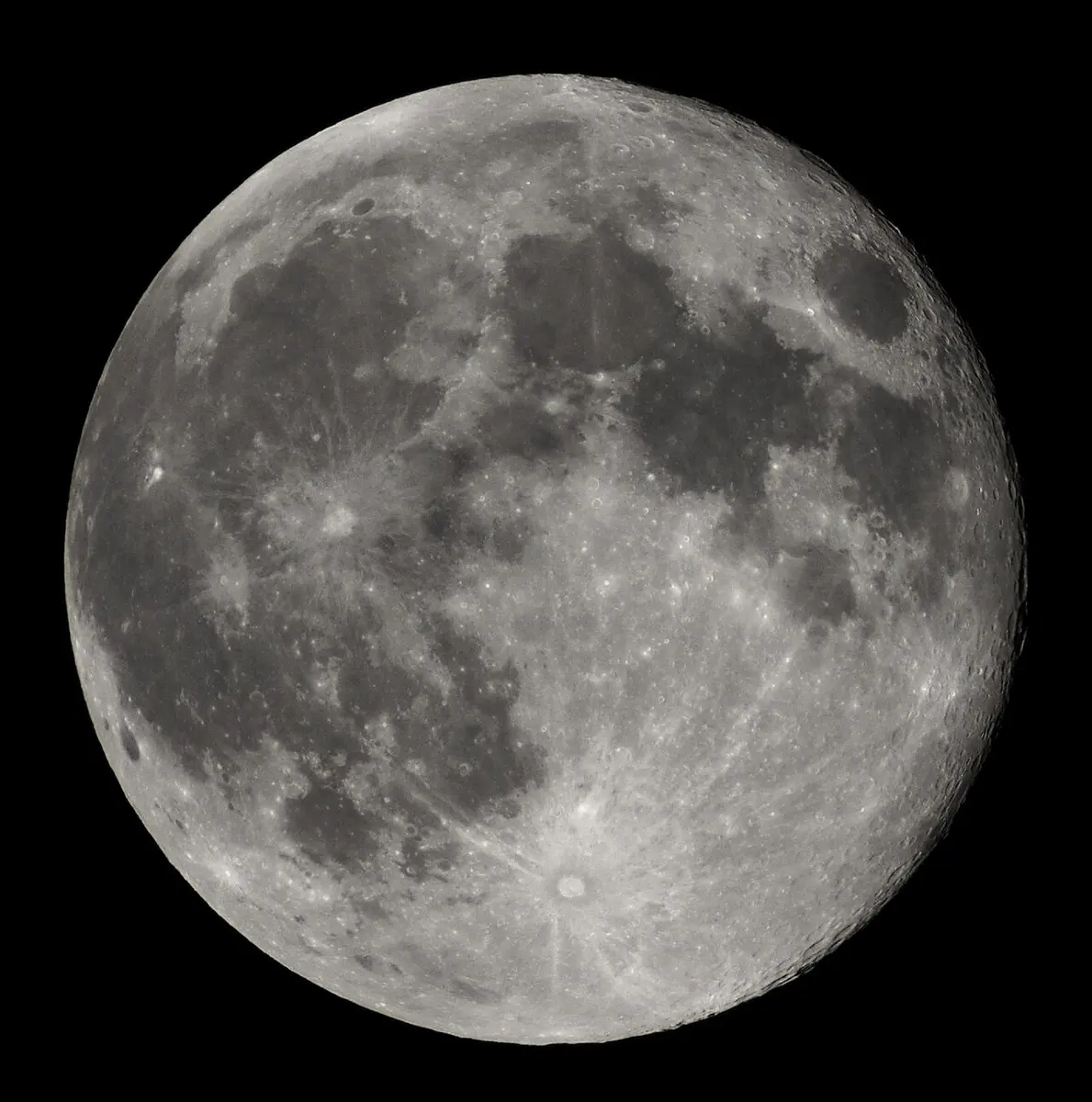
CC BY 2.5. Photograph: Water on the moon may have originated from comets, a new study shows.
Image: Luc Viatour. Photo: Luc Viatour
- own work www.lucnix.be
- Nikon case D50 optical Refractor Vixen 103mm F1000
- Equatorial mount Vixen Super Polaris
Disclaimer
This article retains its original publication date. Subsequent corrections and updates supplied by the source are retained when available. Thames Weekly is not affiliated with or endorsed by the original publisher unless expressly stated. Text and photographs remain credited to their respective creators.