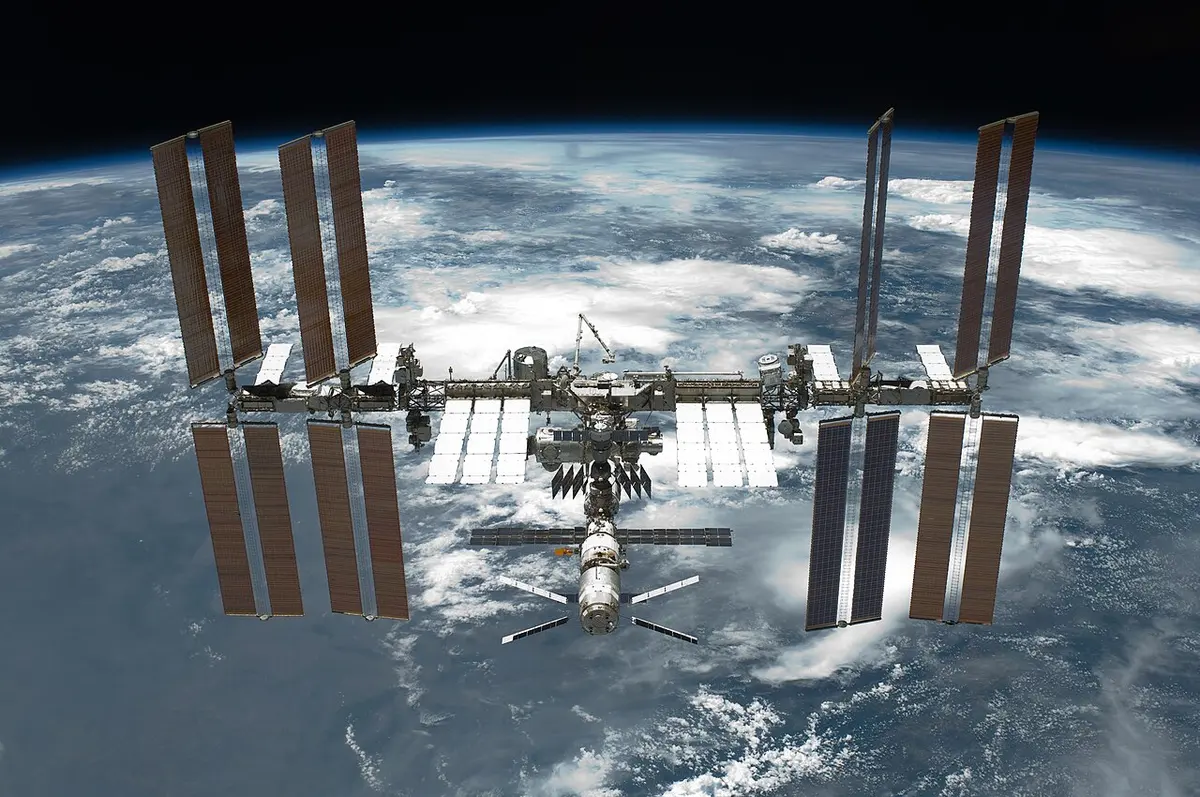
Space debris passed within a short distance of the International Space Station (ISS) Tuesday, forcing the crew to enter their escape capsules to be ready to depart in case of a collision. The debris ultimately missed the orbital outpost and passed within 260 meters (853 ft) of the station at 12:08 UTC (8:08 EDT).
Approximately half an hour after the closest approach of the debris, the crew were given the all-clear to reenter the space station from their escape capsules.
Under normal circumstances and had mission controllers known about the collision threat sooner, the crew would have used the station's thrusters to maneuver out of the path of the oncoming debris.
The size of the debris that threatened the station and its crew in this instance was not immediately known; however, even small fragments can become a major concern due to their high speed.
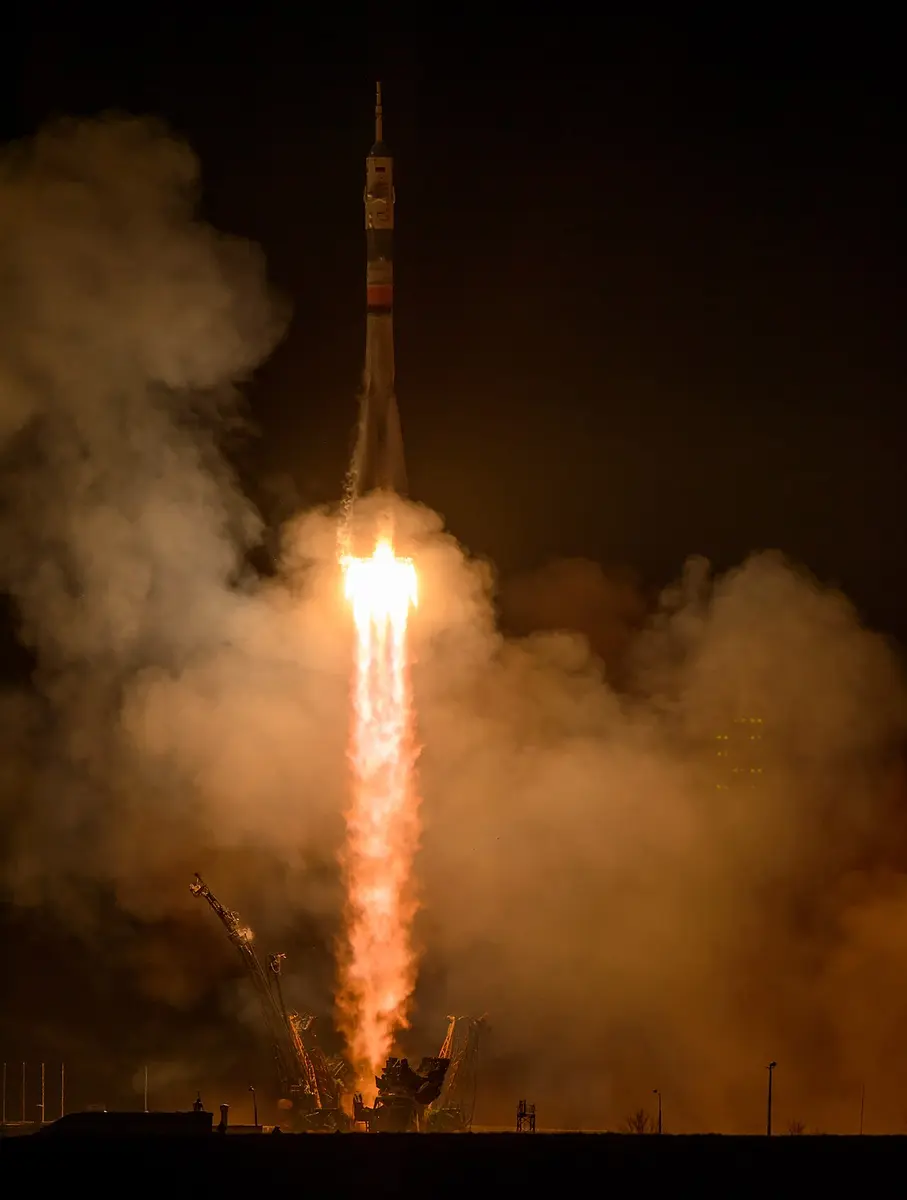
Had the debris struck the ISS, the crew would have sealed their Soyuz spacecraft and departed the station.
There are six people aboard the ISS and two Soyuz spacecrafts docked to the station. Each Soyuz contains accommodations for three people.
This is not the first time that debris threatened the ISS and its crew. A similar incident occurred in March 2009. Estimations show that there are more than 300,000 pieces of debris in Low-Earth orbit over 10 centimeters (4 in) in length, which travel several thousands of kilometers per hour.
Sources
- Clara Moskowitz. Collision scare clears International Space Station — Space.com, June 28, 2011
- William Harwood. Station crew 'shelters in place' for debris threat — Spaceflight Now, June 28, 2011
- International Space Station in debris scare — BBC News, June 28, 2011
Source & Attribution
Originally published by Wikinews on June 29, 2011. Original author: Wikinews.
CC BY 2.5. Photograph: International Space Station (ISS)
Image: NASA. Photo: NASA http://www.spaceflight.nasa.gov/gallery/images/shuttle/sts-134/html/s134e010137.html Source file. Public domain. Public domain.
Disclaimer
This article retains its original publication date. Subsequent corrections and updates supplied by the source are retained when available. Thames Weekly is not affiliated with or endorsed by the original publisher unless expressly stated. Text and photographs remain credited to their respective creators.