
A landmark 2024 settlement between New York’s attorney general and one of the state’s largest nursing home chains succeeded at improving care, reducing injuries, and professionalizing its staff, according to a new report from the independent monitor who oversaw the settlement.
The settlement was the result of a 2023 lawsuit by Attorney General Letitia James against the chain, called Centers Health Care, and its owners. James accused them of siphoning over $83 million out of four nursing homes in the chain, and allowing severe patient abuse and neglect.
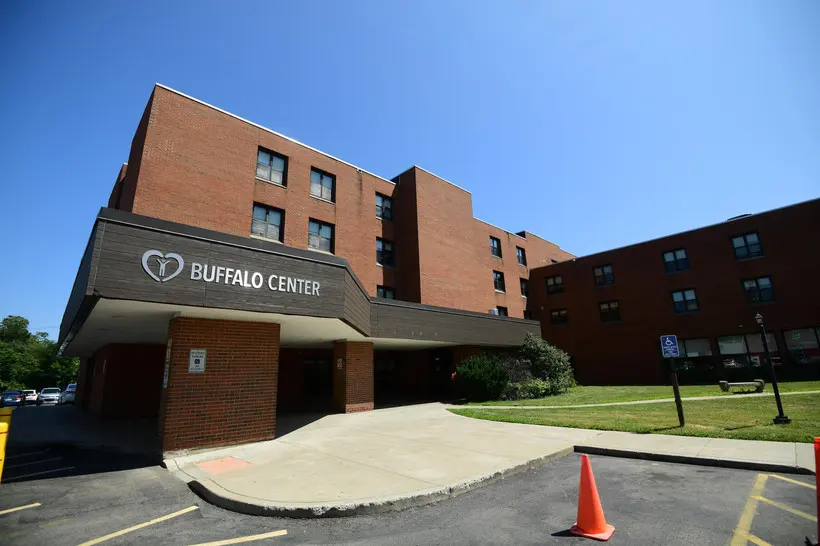
New York Focus recently investigated the aftermath of the settlement, which required the company to implement major reforms, and found that dangerous and degrading conditions have persisted at one of the homes, the Buffalo Center for Rehabilitation and Nursing. The monitor’s report acknowledged those challenges, but also found that the settlement led to many improvements for residents at all four target homes.
New York Focus also found that following the settlement, staffing levels dropped at other nursing homes in the chain, and that serious harm to patients sometimes followed. The monitor was not tasked with overseeing conditions at those homes, since they weren’t part of the settlement.
The settlement required Centers and its owners, Kenneth Rozenberg and Daryl Hagler, to commit to boosting nurse staffing levels, improve treatment and conditions, and pay a $45 million dollar penalty, most of which went into a fund to pay for improvements in the nursing homes. It also barred Centers from reducing nursing levels at the other homes due to the cost of the settlement.
The attorney general appointed David Hoffman and Associates, a Philadelphia-based health care consultancy, as an independent monitor to ensure that Centers complied with the medical parts of the settlement.
Hoffman’s work ended last month, and the firm issued a final report last week summing up its work.
Hoffman said that the settlement had led to “real and sustained care improvements” for “over 1,100 residents on a daily basis,” and that it “should serve as a model” for other states.
The monitor worked closely with Centers staff to revamp everything from wound care to food preparation. This included visiting each of the homes between three and seven times, meeting regularly with Centers staff, and studying how to reduce falls and improve residents’ mental health.
Over the course of the monitor’s term, registered nurse staffing nearly doubled, falls happened less frequently at all four homes, residents developed far fewer new wounds, and were more satisfied with their food, according to Hoffman’s report.
One of the settlement’s key requirements was that the four homes had to boost their nurse staffing levels to 3.5 hours per patient per day. That number was similar to a minimum that President Joe Biden’s administration moved to impose nationwide but that President Donald Trump’s repealed before it could take effect.
New York Focus’s investigation found that Buffalo Center violated that requirement on 82 separate occasions. (The other three homes very rarely violated it.) Of the four homes, Buffalo Center had the worst conditions since the settlement, with residents suffering pest infestations, verbal abuse, and nonconsensual photography, among other incidents.
Hoffman’s report acknowledged these failures, saying that the firm and Buffalo staff worked together to find solutions. One challenge was that the lack of public transportation near the home on weekends made it difficult for staff to get to work. Using settlement dollars to pay for rideshares to and from the nursing home, offering low-cost staff meals, and not allowing new patients on weekends all helped alleviate the staffing shortages.
As of mid-2026, all four homes were in compliance with the 3.5 hour requirement, the report found.
Buffalo has also had the greatest struggles with nursing staff turnover. Currently at 56 percent annually, its turnover rate is still far better than it was before the settlement, when it was near 100 percent, Hoffman’s report noted.
As a condition of the settlement, Centers, Rozenberg, and Hagler paid $35 million to create a “resident care fund” that could be spent on making improvements to the homes. That money paid for things including new beds, an on-staff dietician, and education programs for nurses.
Once all outstanding bills are paid, there will be less than $1 million remaining in the fund. It’s unclear if Centers will continue to pay for the improvements and maintenance once the money is depleted, and without an independent monitor watching.
Attorney general spokesperson Grant Fox noted that since the settlement put an end to financial fraud at Centers, more money will now be available for patient care.
Going forward, the report recommends hiring more staff for psychiatric care, keeping better track of residents’ belongings, maintaining and replacing new food service equipment, and ensuring that emergency physicians are available around the clock.
It’s not clear whether these recommendations will be implemented, now that Hoffman’s oversight has ended. But the report was optimistic that Centers will continue its positive trajectory, saying that the “culture change” and “management responsiveness” at Centers means that improvements are “not likely to disappear once external oversight ends.”
Centers Health Care did not respond to a request for comment.
Source & Attribution
Originally published by New York Focus on August 14, 2026. Original author: Sam Mellins.
Original headline: Settlement Led to Major Improvements at Troubled Nursing Home Chain, Report Finds.
CC BY-ND 4.0. Photograph: New York Focus found that dangerous and degrading conditions persisted at the Buffalo Center for Rehabilitation and Nursing even after a landmark 2024 settlement. | Mark Gutman / New York Focus CC BY-ND 4.0; original same-story photo only, retain caption/credit..
Disclaimer
This article retains its original publication date. Subsequent corrections and updates supplied by the source are retained when available. Thames Weekly is not affiliated with or endorsed by the original publisher unless expressly stated. Text and photographs remain credited to their respective creators.