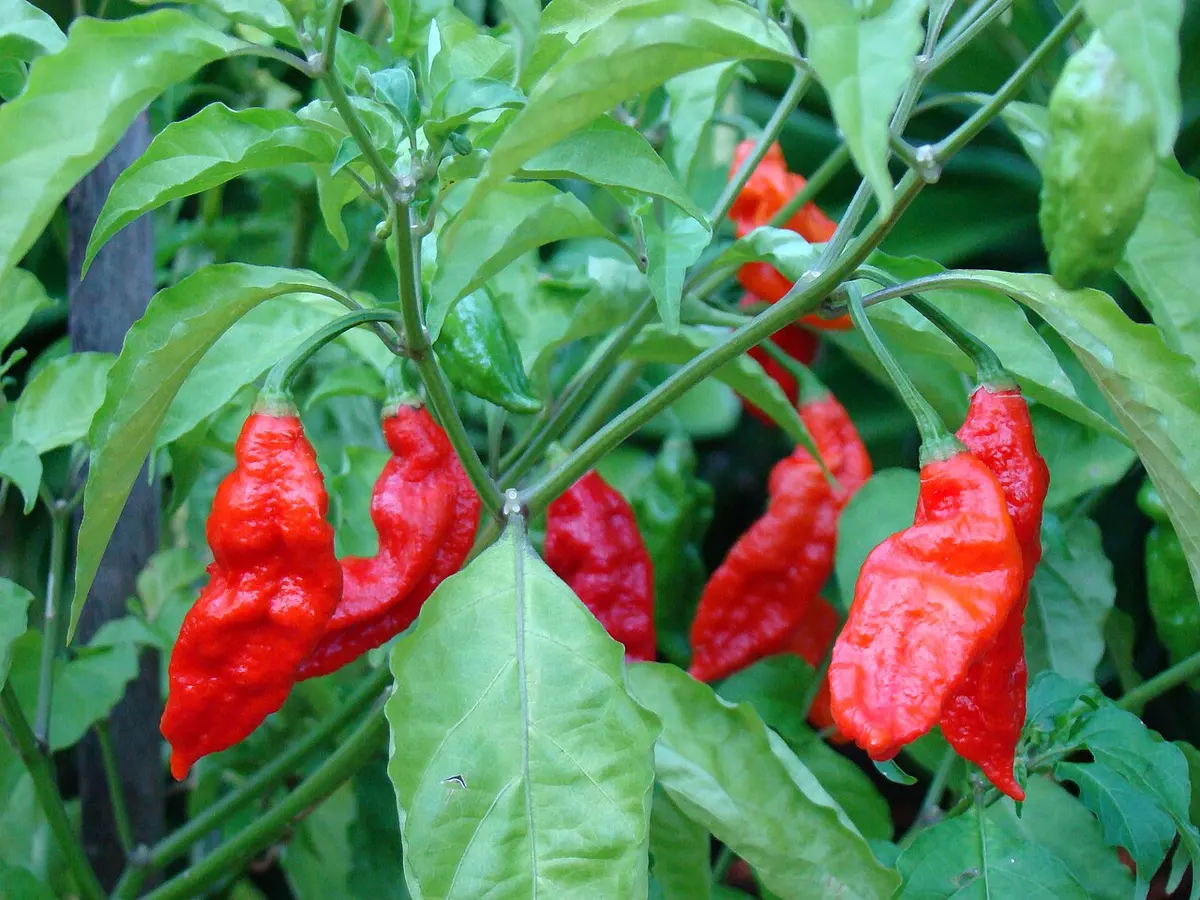
A group of scientists at the Assam Agricultural University of Assam, India has claimed the Bhut Jolokia, once recorded as the hottest chilli in the world by the Guinness World Records, is losing its characteristic hotness with time. The scientists suggested changing agricultural patterns in Assam and cross-pollination as the main reasons.
The scientists said according to their study the hotness of the chilli has reduced greatly in the past eight years. The hotness, which measured 1.5 million Scoville heat units (SHU) in 2008, now measures only 0.4 million SHU.
With this, the Bhut Jolokia loses its status as the world's hottest chilli, left behind by, reportedly, Carolina Reaper of the US and the Trinidad Moruga Scorpion of Trinidad and Tobago.
The scientists suggested cross-pollination and changing farming patterns in Assam were likely the causes. However, they still have to check other possible influences such as changing agro-climatic conditions.
Dr Hazarika of the team said, "We are now taking up some scientific works to maintain the original degree of pungency of bhot jolokia which we found eight years back".
Sources
- Bhut Jolokia stumps to 3rd position in the world! It's not the hottest chilli anymore — Voice of Greater Assam, September 14, 2016
- Pankaj Borthakur. Bhot jolokia losing its sting, study finds — The Assam Tribune, September 13, 2016
Source & Attribution
Originally published by Wikinews on September 14, 2016. Original author: Wikinews.
CC BY 2.5. Photograph: File photo of Bhut Jolokia, 2007.
Image: Asit K. Ghosh Thaumaturgist. Photo: Asit K. Ghosh Thaumaturgist Own work Source file. CC BY-SA 3.0. CC BY-SA 3.0.
Disclaimer
This article retains its original publication date. Subsequent corrections and updates supplied by the source are retained when available. Thames Weekly is not affiliated with or endorsed by the original publisher unless expressly stated. Text and photographs remain credited to their respective creators.