A study published yesterday by Nature estimates the global tree population at just over three trillion. Previous work estimated the total at 400 billion.
The international research, led by Yale University in the US, used satellite images to examine over 400,000 plots of land for estimated tree density. Subarctic regions of Scandinavia, Russia, and North America had the highest densities but the largest forested areas were tropical. The study puts 43% of trees in the tropics, where deforestation is particularly common.
The study also claims the number has been cut by human activity from around six trillion 12,000 years ago. Lead researcher Thomas Crowther said "We have nearly halved the number of trees on the planet, and we have seen the impacts on climate and human health as a result. This study highlights how much more effort is needed if we are to restore healthy forests worldwide." Crowther was "surprised" to come up with a number as high as the trillions.
The study was made at the request of a United Nations project which wanted an estimate on which to base reforestation targets. As well as numbers and distribution the study looks at what factors might control the density of trees in any given area, such as soil type. The study suggests trees outnumber humans by around 422 to one.
"It's not like we've discovered a load of new trees; it's not like we've discovered a load of new carbon", cautioned Crowther, speaking to the BBC. "So, it's not good news for the world or bad news that we've produced this new number." He says the estimate is valuable for lawmakers, academics, and the general public.
Sources
- Jonathan Amos. Earth's trees number 'three trillion' — BBC News Online, September 3, 2015
- Doug Bolton. There are 3 trillion trees on Earth – but they're disappearing fast — The Independent, September 2, 2015
- Ilona Amos. Half of world’s trees wiped out by mankind — The Scotsman, September 2, 2015
External link
- Crowther et al. Mapping tree density at a global scale — Nature, September 2, 2015
Source & Attribution
Originally published by Wikinews on September 3, 2015. Original author: Wikinews.
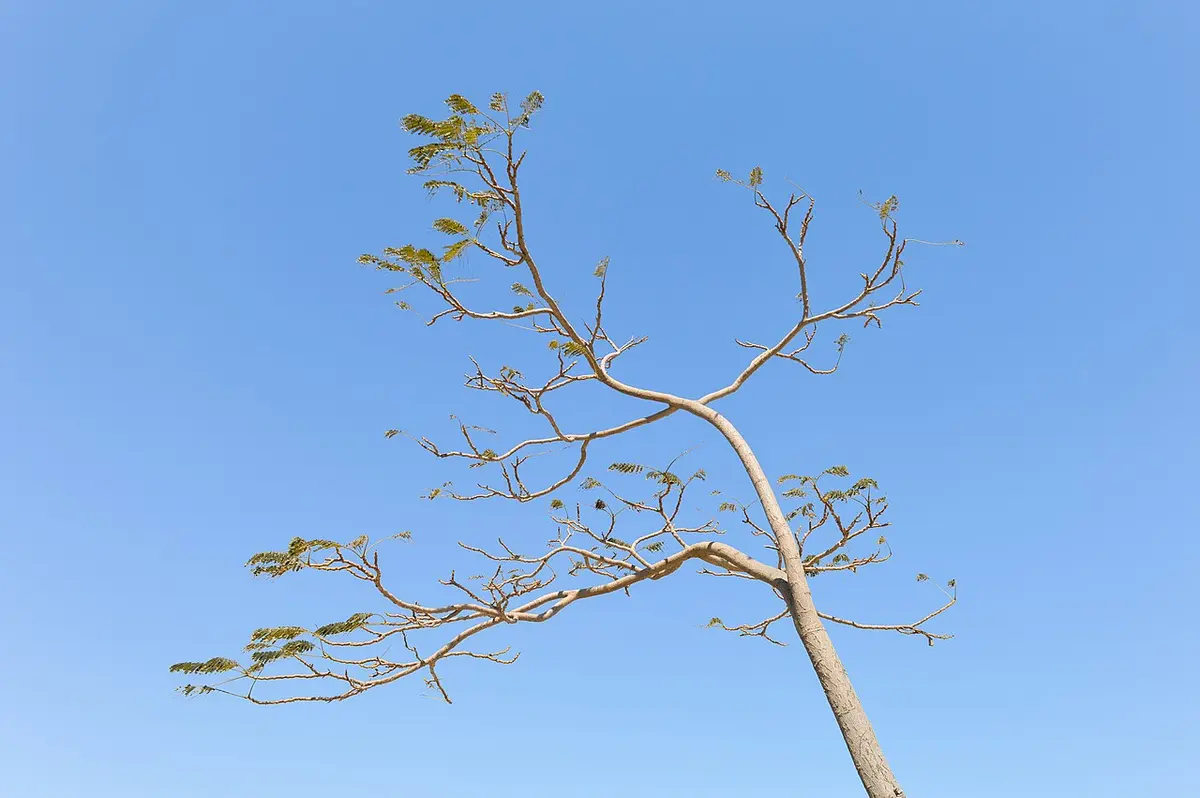
CC BY 2.5. Photograph: A young tree in Saudi Arabia
Image: Francisco Anzola. Photo: Francisco Anzola Young tree Source file. CC BY 2.0. CC BY 2.0.
Disclaimer
This article retains its original publication date. Subsequent corrections and updates supplied by the source are retained when available. Thames Weekly is not affiliated with or endorsed by the original publisher unless expressly stated. Text and photographs remain credited to their respective creators.